Mar 23, 2026
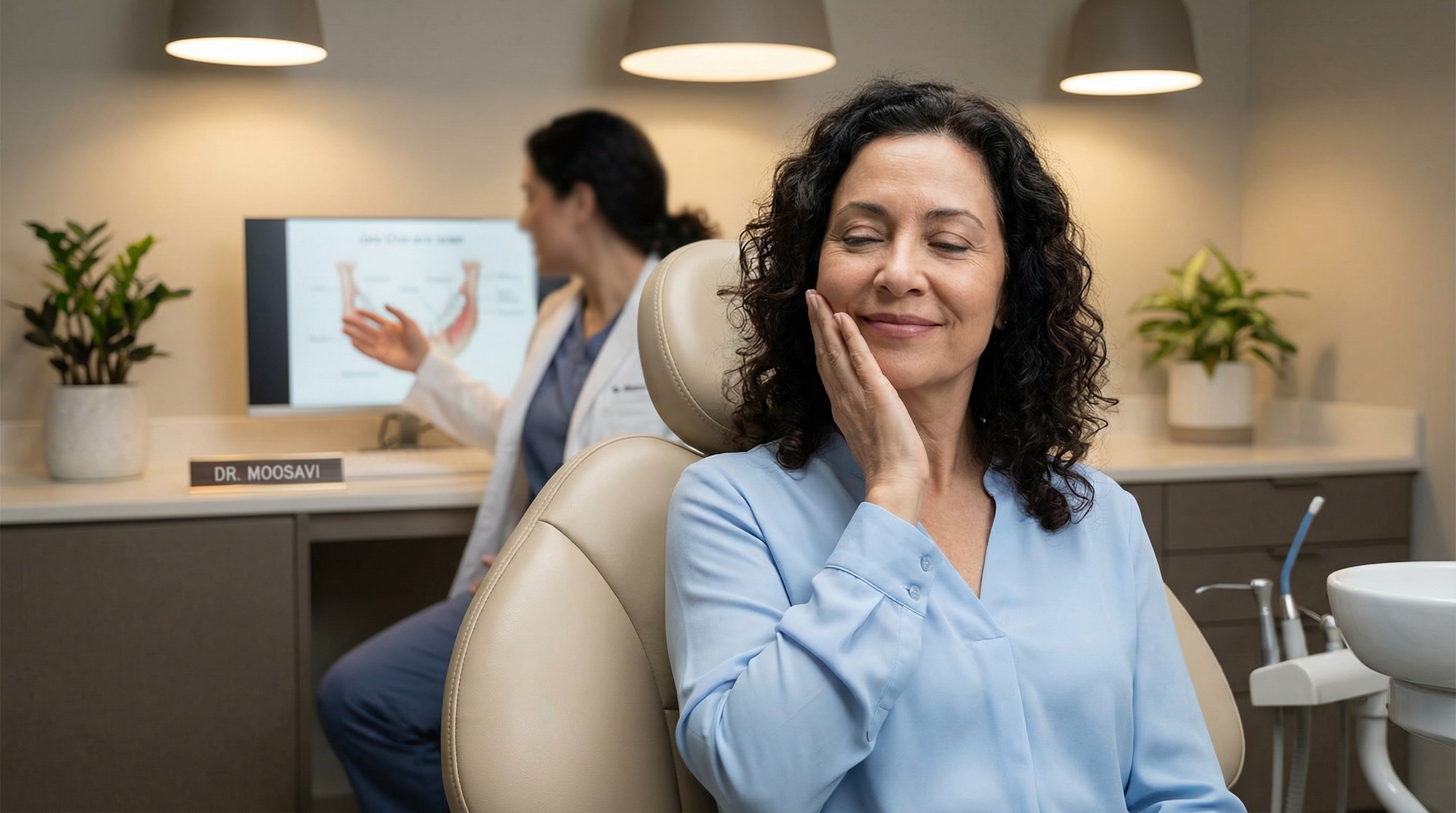
TMJ Disorder Treatment in West New York: Non-Surgical Solutions & Specialist Care
Jaw pain. Clicking sounds every time you chew. Tension headaches that wake you up at night. If this is your reality, you're not alone. Temporomandibular joint (TMJ) disorder affects millions of Americans, and many people live with the pain for years before seeking help, thinking it's just part of aging or stress. But here's the truth: you don't have to live with it, and you likely don't need surgery to fix it.
At Veda Family Dentistry in West New York, we've helped countless patients find relief from TMJ pain using proven, non-surgical approaches. Many of our patients arrive at their first appointment expecting to hear they need surgery, only to discover that simple, effective treatments can eliminate their symptoms entirely. The key is catching it early and working with a dentist who understands TMJ disorder and takes a patient-centered approach to treatment.
In this guide, we'll walk you through what TMJ disorder actually is, the most effective non-surgical treatment options available, and how to know when you're ready for specialized care. Whether you're dealing with mild clicking or severe pain that's affecting your quality of life, you'll find practical answers here. If you're ready to stop the pain, schedule a free TMJ assessment with Dr. Moosavi today.
What Is TMJ Disorder and Why Does It Happen?
Your temporomandibular joint is essentially a hinge that connects your lower jaw to your skull. This tiny joint is one of the most complex joints in your body because it has to handle multiple movements simultaneously: opening and closing, side-to-side motion, and forward movement. When this joint becomes irritated or misaligned, you develop what's called TMJ disorder (sometimes referred to as TMD or temporomandibular disorder).
The tricky part is that TMJ disorder doesn't always announce itself loudly. Some people experience a subtle clicking or popping sound when they chew. Others notice their jaw locks in place, making it hard to open their mouth fully. And then there are those who wake up with tension headaches so intense they can barely function. The symptoms vary widely, which is one reason why TMJ disorder is often misdiagnosed or overlooked entirely.
Common Causes of TMJ Disorder
The causes are just as varied as the symptoms. Stress and tension are probably the biggest culprits, especially if you're someone who clenches your jaw or grinds your teeth at night. But TMJ disorder can also develop from poor posture, especially if you spend hours hunched over a computer. Bite misalignment, previous jaw injuries, and arthritis can all play a role. Some people are simply born with a jaw structure that makes them more prone to TMJ issues. According to research from the National Institute of Dental and Craniofacial Research, TMJ disorders are more common than many people realize and affect millions of Americans. The point is, regardless of what caused your TMJ disorder, effective treatment exists, and many patients experience significant relief through non-surgical methods.
The Symptoms You Shouldn't Ignore
Before we dive into treatment options, let's talk about the warning signs. Knowing what to look for is the first step toward getting relief. If you experience any of these symptoms consistently, it's time to book an assessment with a TMJ-aware dentist like Dr. Moosavi at Veda Family Dentistry.
Pain and Discomfort
The pain associated with TMJ disorder can show up in different places. Some people feel it right at the jaw joint itself, just in front of the ear. Others experience it in the cheeks, temples, or along the side of the face. And then there are those who feel it radiating down into the neck and shoulders. This widespread pain is one reason why many people visit multiple doctors before finding out they actually have a TMJ issue. The pain might be constant, or it might come and go depending on what you eat or how much stress you're under.
Clicking, Popping, or Grinding Sounds
These sounds happen because the cartilage disk inside your joint is no longer positioned correctly. When you open your mouth, the disk shifts, creating that distinctive pop or click. It might happen occasionally, or it might happen every single time you chew. Some people barely notice it. Others find it embarrassing, especially in quiet settings like meetings or restaurants. If you're hearing these sounds regularly, it's a sign that your joint is already experiencing some degree of wear or misalignment.
Jaw Locking
If your jaw suddenly feels stuck in place when you try to open it, that's jaw locking, and it's definitely a sign you need professional care. It might last only a few seconds, or it could persist for longer. Either way, it's uncomfortable and unpredictable. Some patients describe it as one of the most frustrating symptoms because it can happen unexpectedly while you're eating, speaking, or yawning.
Headaches and Neck Tension
This is where TMJ disorder often gets missed. Many patients visit their doctors, neurologists, or chiropractors for headaches without realizing the problem originates in their jaw. The connection is real, though. When your jaw muscles are tight and misaligned, they can trigger tension headaches that feel like they're centered behind the eyes or across the top of the head. They often feel worse in the morning after you've spent the night clenching. This is exactly the kind of hidden TMJ symptom that Dr. Moosavi specializes in identifying and treating. If you're experiencing severe jaw pain, our emergency dentist services are available to help.

Self-Care Strategies You Can Start Today
Here's what we tell our patients at Veda Family Dentistry: some of the most powerful TMJ relief comes from simple, consistent habits you can implement at home. These aren't complicated or expensive, but they do require commitment. The good news is that many people experience noticeable improvement within just a few weeks of starting these strategies. These methods work best when combined with professional care, so think of them as tools that support your overall treatment plan.
Jaw Exercises and Stretches
Think of these as physical therapy for your jaw. They help strengthen the muscles supporting your joint and improve your range of motion. One of the most basic exercises is the relaxation exercise: sit upright, relax your tongue, and slowly open your mouth until you feel a slight stretch. Hold it for a few seconds and close. Repeat 5 to 10 times, several times a day. Another effective stretch is the lateral pterygoid stretch, which targets the deep muscles that control side-to-side jaw movement. Gently move your lower jaw to one side until you feel a mild stretch, hold it for a few seconds, then repeat on the other side. Do this 5 to 10 times per side, three times daily.
The key to success with these exercises is consistency and gentleness. You're not trying to force your jaw open or create pain. If an exercise causes discomfort, stop immediately and discuss it with Dr. Moosavi at your next appointment. Over time, these simple movements can significantly improve your jaw's mobility and reduce muscle tension. For more detailed guidance on proper jaw exercises, the American Dental Association provides excellent resources on managing temporomandibular joint disorders through self-care.
Heat and Ice Therapy
The contrast between heat and ice can work wonders for jaw pain. Use heat (a warm compress or heat pack) for about 15 minutes when your muscles feel tight or tense, especially before doing your jaw exercises. Heat increases blood flow, which helps relax the muscles. On the other hand, use ice therapy (wrapped in a thin cloth) for about 10 minutes if you're experiencing acute pain or swelling. Ice numbs the area and reduces inflammation. Many patients find that alternating between heat and ice throughout the day provides the most relief. The beauty of this approach is that it costs almost nothing and you can do it anytime, anywhere.
Stress Management and Relaxation Techniques
Because stress and tension are major TMJ triggers, managing your stress levels is absolutely essential for long-term relief. When you're stressed, you unconsciously clench your jaw and tense your facial muscles, which keeps your TMJ in a state of constant strain. Practices like deep breathing, meditation, yoga, or even simple progressive muscle relaxation can help. Try this: take a slow breath in through your nose for a count of four, hold it for four, and exhale slowly for four. Do this 10 times, twice a day. Over time, your body will naturally relax, and your jaw will follow suit. According to research from the Mayo Clinic, stress reduction and relaxation techniques are among the most effective first-line treatments for TMJ disorder.
Dietary Adjustments
What you eat matters more than you might think when it comes to TMJ relief. Your goal is to avoid foods that require heavy chewing or that strain your jaw joint. Soft foods like smoothies, yogurt, scrambled eggs, fish, soups, and mashed potatoes should be your go-to choices. Avoid hard, crunchy, or sticky foods like nuts, popcorn, caramel, bagels, and chewy meats. Cut larger foods into smaller pieces to reduce the amount of jaw movement required. Try to chew on both sides of your mouth evenly to avoid overusing one side of your joint. Staying hydrated and maintaining good nutrition also support jaw health. Make sure you're getting enough magnesium, which helps relax muscles, and calcium and vitamin D, which support bone health.
Sleep Posture and Night Guard Considerations
How you sleep can significantly impact your TMJ. Try to sleep on your back or on your side with your jaw in a neutral position, not clenched. Sleeping on your stomach can strain your jaw joint because of the way your head turns. If you're a night clencher or grinder, a custom night guard is one of the most effective non-surgical TMJ treatments available. A custom-fitted night guard, which Dr. Moosavi or Dr. Priya can create for you, prevents your teeth from grinding together and reduces the pressure on your jaw joint while you sleep. Unlike over-the-counter mouth guards, custom guards are specifically designed to your bite and jaw structure, making them far more effective.
Professional Non-Surgical TMJ Treatments
Night Guards and Bite Splints
A properly fitted night guard is like insurance for your jaw. These custom-made devices fit over your upper or lower teeth and prevent grinding and clenching during sleep. The cost typically ranges from $200 to $500, depending on the material and complexity of your bite. What many people don't realize is that a night guard does more than just prevent tooth damage. By stabilizing your jaw joint during sleep, it significantly reduces morning pain and tension. At Veda Family Dentistry, we take impressions of your teeth, design a guard that matches your bite perfectly, and ensure it's comfortable enough to wear all night. Most patients notice improvement within just two to three weeks of consistent use. We'll also make sure you know exactly how to care for your night guard so it lasts as long as possible.
How a Night Guard Works
A night guard works by keeping your jaw in a relaxed, neutral position throughout the night. When you clench or grind, the guard absorbs the force that would otherwise be transmitted directly to your jaw joint. This gives your joint muscles a chance to rest and recover, which is essential for healing. Over time, you'll start to retrain your jaw muscles to remain relaxed even without the guard, though many patients choose to wear it indefinitely because the relief is so significant.
Bite Correction and Orthodontics
Sometimes TMJ pain is directly caused by a misaligned bite. If your upper and lower teeth don't come together properly, your jaw has to work harder to achieve a functional chewing position. This creates constant strain on the joint. In these cases, bite correction through orthodontic treatment, such as Invisalign, can be transformative. The advantage of Invisalign over traditional braces is that it gradually adjusts your bite while remaining invisible and removable. Dr. Priya specializes in using digital smile design to visualize your corrected bite before treatment begins, so you know exactly what to expect. For some patients, bite correction alone eliminates TMJ symptoms entirely. For others, it's one component of a comprehensive treatment plan. During your consultation at Veda Family Dentistry, we'll assess whether bite correction is appropriate for your specific situation.
Physical Therapy and Jaw Stretching Protocols
While you can do many stretches and exercises at home, professional physical therapy takes it to the next level. A physical therapist trained in TMJ treatment can identify specific muscle imbalances and movement patterns that are contributing to your pain. They can provide specialized exercises, manual therapy, and guidance on proper jaw mechanics. Some patients benefit from just a few sessions of professional physical therapy combined with at-home exercises. Others find that ongoing sessions help them maintain progress over time. Your dentist can refer you to a physical therapist who specializes in TMJ disorders for more intensive care if needed.
Anti-Inflammatory Medications and Pain Management
While medications aren't a long-term solution, they can be incredibly helpful during acute pain episodes or while you're implementing other treatments. Over-the-counter nonsteroidal anti-inflammatory drugs (NSAIDs) like ibuprofen or naproxen can reduce both pain and inflammation. For more severe pain, your doctor might prescribe muscle relaxants or even stronger medications temporarily. The key word here is temporarily. Medications work best when combined with physical therapy, lifestyle changes, and other non-surgical treatments. Always consult with your healthcare provider about which medications are appropriate for your situation. Some patients benefit from topical pain relief creams applied directly to the jaw joint area. These are available over-the-counter and can provide quick relief during flare-ups.

Splint Therapy and Advanced Oral Appliances
Beyond a simple night guard, there are more sophisticated oral appliances designed specifically to treat TMJ disorder. A daytime splint, sometimes called a therapeutic splint, is worn during the day and repositions your jaw slightly to reduce joint stress. These are particularly helpful for people who experience significant pain during waking hours, not just at night. The cost varies, but many insurance plans cover therapeutic splints because they're considered medically necessary treatment rather than cosmetic. Another advanced option is a mandibular repositioning appliance, which is specifically designed to move your lower jaw forward slightly. This takes pressure off the joint and can dramatically reduce pain, especially for patients with anterior disk displacement. Your dentist will need to take precise measurements and work with a laboratory to create this custom appliance, but the results can be remarkable for the right patient.
Trigger Point Injections and Advanced Pain Management
For patients with severe muscle tension and trigger points (tight knots in the muscles), trigger point injections can provide relief. These injections, which contain medication to relax the muscle, are administered directly into the tight muscle tissue. They're minimally invasive and can provide immediate relief that lasts for weeks. Some patients need multiple rounds of injections as part of their overall treatment plan, especially while they work on physical therapy and lifestyle changes. According to information from the Cleveland Clinic, trigger point injections are one of several advanced non-surgical options available for TMJ management. Topical numbing treatments and pain relief creams can also be helpful for managing acute discomfort. While they won't treat the underlying TMJ disorder, they can help you get through uncomfortable periods while your other treatments take effect.
When to See an Oral Surgery Specialist vs. a General Dentist
This is an important question, and the answer is nuanced. Most TMJ disorder can be effectively treated by a well-trained dentist like Dr. Moosavi without ever needing to see an oral surgeon. In fact, many specialists recommend exhausting all non-surgical options before considering surgery because surgery carries risks and may not solve the problem. However, there are specific situations where seeing an oral surgeon makes sense.
Signs You Should Consult with Dr. Moosavi First
Dr. Moosavi has advanced training in TMJ assessment and management, including the use of 3D CBCT imaging to precisely diagnose your condition. He can evaluate whether your TMJ disorder is caused by muscle tension, bite misalignment, joint inflammation, or a combination of factors. Based on this assessment, he can create a comprehensive non-surgical treatment plan tailored to your specific situation. Most patients never need to see an oral surgeon if they start with Dr. Moosavi's evaluation and follow through with the recommended treatments. His advanced training in oral surgery means he has a deep understanding of when surgery is truly necessary and when it's not.
When Oral Surgery Might Be Considered
Oral surgery is typically considered only when conservative treatments have been tried for an extended period (usually at least six months) and haven't provided relief. Surgery is also sometimes recommended if imaging shows significant joint damage or if your TMJ disorder is caused by a structural problem that physical therapy and night guards can't address. However, even in these cases, Dr. Moosavi can perform the evaluation and either provide the surgery himself (given his advanced training) or refer you to an oral surgeon if he determines that's the best path forward. The bottom line is this: start with a comprehensive evaluation from someone who deeply understands TMJ disorder, like Dr. Moosavi at Veda Family Dentistry. Based on what he finds, you'll know whether surgery is ever necessary. In most cases, it's not.
Your First TMJ Assessment at Veda Family Dentistry
When you come in for a TMJ assessment, Dr. Moosavi will take the time to understand your specific symptoms, their severity, and how they're affecting your daily life. He'll ask detailed questions about when the pain started, what makes it worse, what makes it better, and whether you've noticed any patterns. This information is crucial because it helps him narrow down the cause of your TMJ disorder. He'll perform a thorough physical examination, palpating the jaw joint and muscles to identify areas of tenderness or tightness. He'll assess your bite, your jaw opening and closing patterns, and listen for any clicking or popping sounds. Depending on what he finds, he may recommend advanced imaging such as 3D CBCT scans, which provide detailed pictures of your jaw joint and bone structure. This imaging is incredibly valuable because it allows Dr. Moosavi to see exactly what's happening inside your joint, not just guess based on symptoms alone.
Creating Your Personalized Treatment Plan
Once Dr. Moosavi has all the information he needs, he'll create a personalized treatment plan. This might include a combination of the treatments we've discussed: a custom night guard, specific exercises and stretches, dietary changes, stress management techniques, and possibly bite correction through Invisalign. He'll explain each component of the plan clearly, so you understand why each step is important and what you can expect. One of the things that sets Veda Family Dentistry apart is our commitment to clear communication. Dr. Moosavi believes in meeting patients where they are. If you're skeptical about treatment or worried about cost, he'll address those concerns directly. If you need help understanding how your bite relates to your jaw pain, he'll explain it in a way that makes sense. He's not here to push unnecessary treatment. He's here to help you find relief using the most effective, least invasive methods possible.
Financing Options and Insurance Coverage
We understand that cost is a real consideration when you're dealing with TMJ disorder. That's why Veda Family Dentistry works with most insurance plans and offers flexible financing options. Night guards and bite correction through Invisalign are often partially covered by insurance plans, especially when they're deemed medically necessary, which they often are for TMJ treatment. We'll handle the insurance verification process for you, so you know exactly what your costs will be before you begin treatment. If you don't have insurance or if your insurance doesn't cover certain treatments, we offer CareCredit, which allows you to make affordable monthly payments with no interest for qualified purchases. We also offer in-house payment plans so you can spread out the cost of treatment over time. Our financial coordinator will work with you to find an option that fits your budget. We believe that effective TMJ treatment should be accessible to everyone.
Real Patient Stories: Non-Surgical TMJ Success at Veda
One of the best ways to understand what's possible is to hear from patients who've already walked this path. Marcus came to Veda after years of dealing with jaw pain that he thought was just part of getting older. Within three months of wearing a custom night guard, doing the recommended exercises, and making some dietary adjustments, his pain dropped from a 7 out of 10 to a 2. He's now able to eat normally again and no longer wakes up with headaches. Sarah was convinced she needed surgery to fix her clicking jaw. She was surprised to learn that her TMJ disorder was caused partly by a bite misalignment. After completing Invisalign treatment with Dr. Priya, her clicking disappeared entirely. No night guard needed. No surgery. Just a straightforward correction of the underlying problem. Her story is one of many success stories from patients at Veda Family Dentistry who found relief without invasive procedures.
Why Dr. Moosavi's Approach is Different
Dr. Moosavi's approach to TMJ disorder is rooted in evidence-based dentistry and a deep understanding of jaw anatomy and function. He uses advanced diagnostic tools like 3D CBCT imaging to see exactly what's happening in your joint, rather than making assumptions based on symptoms alone. He's also trained in oral surgery, which means he understands the full spectrum of TMJ treatment options, from simple at-home exercises to complex surgical procedures. This training gives him a unique perspective: he knows which patients truly need surgery and which ones will do fine with conservative treatment. Perhaps most importantly, Dr. Moosavi believes in starting conservatively. Surgery should be a last resort, not a first choice. He'll work with you to exhaust non-surgical options first, and only recommend surgery if it's truly necessary and likely to help. This philosophy has led to countless patients finding relief without ever going under the knife.
Schedule Your Free TMJ Assessment Today
If you're dealing with jaw pain, clicking, locking, or tension headaches, you don't have to suffer in silence. Effective, non-surgical treatment is available, and it starts with a proper evaluation. At Veda Family Dentistry in West New York, we've helped patients just like you reclaim their quality of life through comprehensive, personalized TMJ care. Dr. Moosavi is ready to listen to your story, thoroughly evaluate your situation, and create a treatment plan designed specifically for you. Whether you need a simple night guard, Invisalign bite correction, physical therapy guidance, or a combination of treatments, we have the expertise and compassion to help you feel better.
Call us today to schedule your free TMJ assessment. You can also book online at Veda Family Dentistry's appointment booking system. In your first visit, we'll determine what's causing your TMJ symptoms and discuss the best path forward. Most patients are amazed at how quickly they start feeling better once they have a clear understanding of what's wrong and a concrete plan to fix it.
“I’ve never felt so comfortable at a dental office. Everyone here truly cares and takes the time to explain everything clearly.”
Maria Alvarez
Teacher


