Mar 23, 2026
Professional Teeth Whitening vs. At-Home Kits: Before & After Results in West New York
Your teeth used to be bright white, but over the years they've become dull, yellow, or stained. Maybe you've tried over-the-counter whitening strips, but the results were disappointing. Maybe you've just accepted that your teeth will never be as white as you'd like them to be. Or maybe you're getting ready for a big event, a wedding, a job interview, or just a fresh start, and you want your smile to match your confidence.
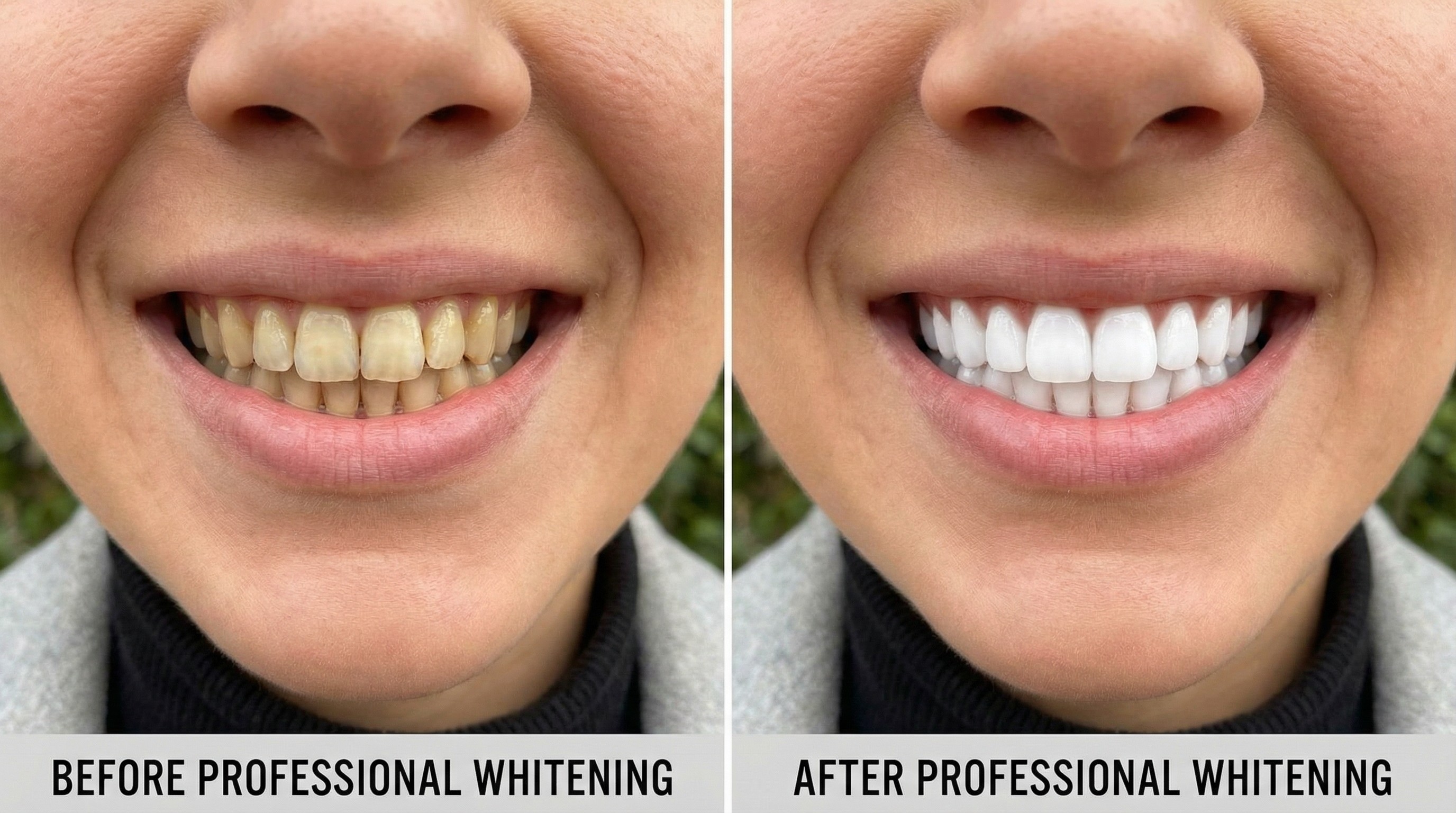
The truth is that professional teeth whitening can make a dramatic difference. The before and after transformations are often stunning. A dull, yellow smile can become bright white in as little as an hour. At Veda Family Dentistry in West New York, Dr. Priya specializes in cosmetic dentistry, and professional teeth whitening is one of her favorite treatments because the results are so immediately visible and the impact on patient confidence is so profound.
In this comprehensive guide, we'll explain what causes tooth staining, how professional whitening works, how it compares to at-home kits, what kind of results you can expect, and what the costs are. We'll show you real before and after examples, discuss how long results last, and explain how to maintain your bright smile. By the end, you'll understand exactly what professional whitening can do for you and whether it's the right choice for your smile.
Understanding Tooth Staining: Why Your Teeth Have Changed Color
Your teeth naturally change color over time. You're not imagining it. Several factors contribute to tooth staining, and understanding them helps you understand why professional whitening works and how to maintain your results.
Extrinsic Staining: Surface Stains from External Sources
Extrinsic stains are stains on the outer layer of your tooth, the enamel. These are caused by external substances that contact your teeth. Common culprits include:
Coffee and Tea: According to the American Dental Association, the tannins in coffee and tea are major causes of tooth staining. If you drink coffee or tea daily, your teeth will gradually become darker.
Red Wine: Red wine contains both tannins and acids that stain teeth. One glass of red wine a few times a week can noticeably stain your teeth over time.
Tobacco: Whether you smoke cigarettes, cigars, or use chewing tobacco, tobacco stains teeth significantly. Smokers typically have much darker teeth than non-smokers, even with good oral hygiene.
Berries and Colored Foods: Blueberries, blackberries, cranberries, beets, and other deeply colored foods can stain teeth. Soy sauce and curry also cause staining.
Acidic Drinks: Soda, sports drinks, and citrus juices are acidic, which weakens enamel and makes teeth more susceptible to staining. The acidity also contributes directly to discoloration.
Foods with Dyes: Artificially colored foods and drinks can stain teeth. Popsicles, colored candies, and artificially colored beverages are common culprits.
The good news about extrinsic stains is that they respond very well to professional whitening because they're just on the surface of the tooth.
Intrinsic Staining: Stains Inside the Tooth
Intrinsic stains occur inside the tooth, in the dentin layer beneath the enamel. These stains are harder to treat, but professional whitening can still be effective.
Age: As you age, the outer enamel wears away, revealing the naturally yellower dentin beneath. This is a normal part of aging and affects everyone.
Medications: Certain antibiotics, particularly tetracycline taken during childhood, can cause permanent intrinsic staining. Antihistamines, high blood pressure medications, and antipsychotic medications can also cause staining.
Excessive Fluoride: Too much fluoride during childhood development can cause fluorosis, which appears as white or brown spots on teeth.
Tooth Trauma: If you've had an injury to a tooth, that tooth might discolor as it responds to the injury.
Enamel Erosion: When enamel wears away from acid exposure, grinding, or wear and tear, the yellower dentin shows through.
Intrinsic stains are more challenging to whiten, but professional whitening with higher-concentration peroxide can still significantly lighten them.
Combination Staining
Most people have a combination of extrinsic and intrinsic staining. Professional whitening addresses both types, though it's more effective on extrinsic stains.
Professional In-Office Whitening: Fast and Dramatic Results
Professional in-office whitening is the most effective whitening option available. Dr. Priya uses advanced whitening systems that deliver visible results in one appointment.
How Professional Whitening Works
During a professional whitening appointment at Veda Family Dentistry, here's what happens:
First, Dr. Priya examines your teeth to make sure you're a good candidate for whitening. She checks for cavities, crowns, and other factors that might affect the treatment. She'll also assess your current shade using a shade guide so you can see exactly how much lighter your teeth become.
Next, she protects your gums and lips with barriers to prevent the whitening gel from irritating soft tissues. She applies a professional-grade whitening gel that contains a higher concentration of hydrogen peroxide or carbamide peroxide than over-the-counter products. According to research from the Journal of Esthetic and Restorative Dentistry, professional whitening gels contain 15 to 35 percent peroxide, compared to 3 to 10 percent in over-the-counter products.
The gel sits on your teeth for 15 to 20 minutes. Some professional systems use a special light to activate the whitening process, though research suggests the light itself provides minimal additional benefit beyond the gel. The gel is then removed, your teeth are rinsed, and the process is repeated two to three times in a single appointment.
The entire appointment typically takes 60 to 90 minutes. Many patients see dramatic results in that single visit.
Professional Whitening Results and Timeline
Shade Improvement: Professional whitening typically achieves 6 to 10 shades of improvement. If your teeth started as a deep yellow (shade A3 or darker), they can become a bright white (shade A1 or even whiter). The improvement is noticeable immediately and continues to improve slightly over the next 24 hours as your teeth rehydrate.
Longevity: Professional whitening results typically last 6 to 12 months, depending on your habits. If you drink coffee, tea, red wine, or use tobacco, your results will fade faster. If you avoid staining substances, your results will last longer.
Maintenance: Dr. Priya often recommends touch-up treatments every 6 to 12 months to maintain your bright smile. These touch-ups are quick and inexpensive compared to the initial whitening.
Professional Whitening Cost in West New York
Professional in-office whitening at Veda Family Dentistry costs $300 to $600 per session, depending on the specific system used and the complexity of your case. Most patients need only one session to achieve their desired results.
Professional Whitening Advantages
The benefits of professional whitening are significant:
Fast: Results in one appointment, perfect for events or when you need quick results
Dramatic: 6 to 10 shades of improvement in a single visit
Safe: Professional supervision ensures the whitening gel doesn't damage your teeth or gums
Customized: Dr. Priya can target specific areas and ensure even results
Long-lasting: Results last 6 to 12 months, much longer than at-home kits
No sensitivity management: If you do experience sensitivity (rare), Dr. Priya can provide solutions immediately
Professional Whitening Disadvantages
The drawbacks are minimal:
Cost: Higher than at-home kits (though the results justify the investment)
Temporary: Results fade over time, especially if you consume staining foods and drinks
Not for everyone: If you have severe intrinsic staining from medications or fluorosis, results might be less dramatic
Professional Take-Home Whitening Trays: Gradual and Customized
In addition to in-office whitening, Dr. Priya offers custom-fitted take-home whitening trays. These are more effective than over-the-counter options because they're custom-made to fit your mouth perfectly.
How Professional Take-Home Trays Work
Dr. Priya takes an impression of your teeth and has custom trays made in a dental laboratory. You wear these trays with professional-grade whitening gel (10 to 15 percent peroxide) for 30 minutes to a few hours daily, depending on the concentration of the gel. Treatment typically takes 2 to 3 weeks to achieve full results.
Take-Home Tray Results and Timeline
Shade Improvement: Custom take-home trays typically achieve 4 to 8 shades of improvement over 2 to 3 weeks. This is less dramatic than in-office whitening but still very effective.
Longevity: Results last 4 to 6 months with custom trays, or up to 12 months if you're careful about staining foods and use the trays only occasionally for maintenance.
Take-Home Tray Cost
Custom whitening trays cost $150 to $400, depending on the gel strength and number of trays provided. You can reuse the trays, so future whitening sessions cost only the price of the gel, typically $30 to $50.
Take-Home Tray Advantages
Customized: The trays are made specifically for your mouth, ensuring even coverage
Convenient: You can whiten on your own schedule
Reusable trays: After the initial investment, future whitening is inexpensive
Gradual: Slower results mean less sensitivity for some patients
Good for maintenance: Once you've achieved your desired shade with in-office whitening, you can maintain results with occasional use of take-home trays
Take-Home Tray Disadvantages
Slower: Takes 2 to 3 weeks to see full results
Requires compliance: You have to remember to wear the trays daily
Risk of sensitivity: Some patients experience tooth sensitivity with custom trays
Initial cost: More expensive upfront than at-home kits, though less than in-office whitening
At-Home Whitening Kits: Budget-Friendly but Limited Results
Over-the-counter whitening kits are available at drugstores and online. They're affordable and convenient, but results are limited.
How At-Home Kits Work
Over-the-counter whitening comes in several forms: strips, gels, trays, pens, and toothpastes. Most contain 3 to 10 percent peroxide, which is much lower than professional products. The trays are one-size-fits-all, so they don't fit as well as custom trays, which means the gel can contact your gums and cause irritation.
At-Home Kit Results
Shade Improvement: Over-the-counter kits typically achieve 2 to 4 shades of improvement. For some people with mild staining, this is acceptable. For others with more significant staining, it's disappointing.
Longevity: Results last 3 to 6 months, and often fade faster than professional results because people often discontinue use once they achieve minimal improvement.
At-Home Kit Cost
Over-the-counter whitening kits cost $10 to $50. Multiple boxes might be needed for a complete treatment course.
At-Home Kit Advantages
Affordable: Much less expensive than professional whitening
Convenient: Use at home whenever you want
Safe: Low peroxide concentration makes them safe for daily use
At-Home Kit Disadvantages
Limited results: 2 to 4 shades of improvement is modest
Slow: Visible results take weeks
Risk of gum irritation: One-size-fits-all trays don't fit well and gel can irritate gums
Inconsistent results: Results vary widely depending on product and application
Shorter longevity: Results fade faster than professional whitening
No professional guidance: If you experience sensitivity or the results disappoint, there's no professional to consult
According to the American Dental Association, while over-the-counter products are safe when used as directed, professional whitening generally produces better, faster, and longer-lasting results.
Comparing Professional vs. At-Home Whitening: Cost and Results
Let's break down the comparison:
In-Office Professional Whitening
Cost: $300 to $600
Results: 6 to 10 shades lighter
Timeline: One appointment
Longevity: 6 to 12 months
Cost per month of results: $25 to $100
Custom Take-Home Trays
Cost: $150 to $400 initially, then $30 to $50 per refill
Results: 4 to 8 shades lighter
Timeline: 2 to 3 weeks
Longevity: 4 to 12 months
Cost per month of results: $12 to $100
Over-the-Counter Kits
Cost: $10 to $50
Results: 2 to 4 shades lighter
Timeline: 2 to 4 weeks
Longevity: 3 to 6 months
Cost per month of results: $2 to $16
On a purely financial basis, over-the-counter kits seem like a bargain. But when you factor in the time investment, the limited results, and the higher frequency of touch-ups needed, professional whitening often provides better value.

Managing Whitening Sensitivity
Some people experience tooth sensitivity during or after whitening. This is temporary and manageable.
Why Whitening Causes Sensitivity
Whitening gel temporarily opens the pores in your tooth enamel to penetrate and bleach the stains inside. This can expose the dentin underneath, which contains thousands of tiny tubules that connect to the nerve. When these are exposed, you feel sensitivity to temperature changes.
Prevention Strategies
Use Sensitivity Toothpaste: Before your whitening treatment, start using a sensitivity toothpaste (containing potassium nitrate) for a week or two. This helps block the tubules and reduce sensitivity. According to the Academy of General Dentistry, sensitivity toothpaste applied before whitening significantly reduces the incidence of whitening sensitivity.
Apply Fluoride Rinse: Fluoride rinses strengthen enamel and reduce sensitivity. Use a fluoride rinse after your whitening treatment.
Avoid Acidic Foods: Before and after your whitening appointment, avoid acidic foods and drinks (citrus, soda, sports drinks, wine) that can soften enamel and increase sensitivity.
Don't Overuse: If you're using at-home whitening, don't exceed the recommended frequency. More whitening doesn't mean faster results; it just increases sensitivity.
Use Desensitizing Gel: For professional take-home trays, Dr. Priya can provide a desensitizing gel to use in your trays along with or instead of the whitening gel.
Managing Sensitivity if It Occurs
If you experience sensitivity:
Switch to soft-bristled toothbrush: Hard bristles can irritate sensitive teeth
Avoid whitening temporarily: Take a break from whitening until sensitivity subsides
Use sensitivity products: Sensitivity toothpaste and fluoride rinses provide relief
Apply cold compress: A cold compress on your cheek reduces sensitivity temporarily
Contact Dr. Priya: If sensitivity is severe, let her know. She can provide professional solutions
Maintaining Your Whitening Results
Your professional whitening investment is worth protecting. Here's how to keep your smile bright.
Foods and Drinks to Avoid or Limit
To maintain your whitening results, minimize consumption of staining foods and drinks:
The Big Offenders:
Coffee and tea
Red wine
Beets and berries
Soy sauce and curry
Cola and dark sodas
Red sauces (tomato-based)
Healthy Habits for Bright Teeth
Drink Through a Straw: If you must drink staining beverages, use a straw to minimize contact with your teeth.
Rinse After Staining Foods: After consuming staining foods or drinks, rinse your mouth with water to remove residue.
Brush Gently: Don't brush immediately after consuming acidic foods or drinks, as this can damage enamel. Wait 30 minutes, then brush gently.
Floss Daily: Flossing removes staining debris from between teeth where your toothbrush can't reach.
Professional Cleanings: Maintain regular dental cleanings every six months. Professional cleanings remove surface stains before they become permanent.
Avoid Tobacco: Smoking stains teeth significantly. Quitting (or not starting) keeps your smile bright.
Use Whitening Toothpaste: After your professional whitening, using a whitening toothpaste helps maintain your results. However, avoid overusing whitening toothpaste, as some contain abrasives that can damage enamel over time.
Touch-Up Treatments: Dr. Priya recommends touch-up whitening every 6 to 12 months to maintain your bright smile. If you have custom trays, you can do maintenance whitening at home with gel refills.
Whitening Before Cosmetic Dentistry
Many patients choose to whiten their teeth before getting other cosmetic treatments like veneers, bonding, or crowns. Here's why:
Why Whiten First
Teeth whitening only works on natural tooth structure. Crowns, veneers, bonded areas, and other restorations don't whiten. So if you're planning cosmetic work, it's best to whiten first, then have your cosmetic restorations made to match your newly whitened teeth.
If you do it the other way around (cosmetic work first, then whitening), your natural teeth will whiten but your restorations won't, creating a mismatch in shade.
The Complete Smile Makeover Approach
Many patients combine whitening with other cosmetic treatments:
Whitening Plus Bonding: Start with professional whitening, then use cosmetic bonding to close gaps, cover chips, or reshape teeth. Your restored teeth are matched to your newly whitened shade.
Whitening Plus Veneers: Whiten your teeth first, then place porcelain or composite veneers that are matched to your whitened shade. Dental veneers create a stunning complete smile transformation.
Whitening Plus Invisalign: Straighten your teeth with Invisalign first (or simultaneously), then whiten your newly straightened teeth.
Dr. Priya often recommends whitening as the starting point for any smile transformation because it's affordable, noninvasive, and the results are immediate.
Real Before and After Results from Veda Family Dentistry Patients
The best way to understand what professional whitening can do is to see real results.
Sarah's Story: From Coffee Stains to Hollywood White
Sarah is a coffee lover who drinks three cups every morning. Over 20 years, her teeth became significantly stained and dull. She tried at-home whitening strips but was disappointed with the minimal results. She came to Dr. Priya for professional whitening.
In a single one-hour appointment, Sarah's teeth went from a deep yellow (shade A3) to a bright white (shade A1). The transformation was dramatic. Two years later, Sarah maintains her bright smile with occasional touch-ups. "The whitening changed everything," Sarah says. "I feel so much more confident. It's one of the best things I've ever done for myself."
Michael's Story: The Smoker Who Quit and Whitened
Michael smoked for 30 years and had severely stained, darkened teeth. He finally quit smoking and wanted to celebrate with a brighter smile. Dr. Priya performed professional whitening, achieving 8 shades of improvement. Michael follows Dr. Priya's advice about avoiding staining foods and gets touch-ups annually. "My dentist told me the whitening would be a waste because of my smoking," Michael says. "But Dr. Priya believed I had quit and treated me with the whitening I wanted. That confidence gave me motivation to stay quit."
Jennifer's Story: The Bride-to-Be
Jennifer got engaged and wanted her smile to be perfect for her wedding photos. She scheduled professional whitening one week before her wedding. The one-hour treatment gave her the bright, confident smile she wanted in her wedding photos. "I'm so glad I did it," Jennifer says. "Looking at our wedding photos, my smile is exactly what I wanted. It was the perfect final touch for the big day."
Sensitivity Isn't Always a Problem
Many patients worry about whitening sensitivity, but Dr. Priya's experience shows that it's rare and manageable:
Thomas's Story: No Sensitivity at All
Thomas had sensitive teeth his whole life and was nervous about professional whitening. He used sensitivity toothpaste for two weeks before his appointment as Dr. Priya recommended. His whitening went smoothly with zero sensitivity. "I was so worried about pain," Thomas says. "But with Dr. Priya's guidance, I had no problems at all. The results are amazing."
Schedule Your Professional Teeth Whitening Consultation
If you're ready to brighten your smile, the first step is a consultation with Dr. Priya. During this visit, she'll:
Examine your teeth to identify the type and severity of staining
Use a shade guide to show your current color and what's achievable
Discuss professional whitening options (in-office, take-home, or combination)
Explain costs and financing options
Answer all your questions about sensitivity, maintenance, and results
Call Veda Family Dentistry to schedule your whitening consultation. You can also book online at your convenience.
Many patients schedule their whitening for a Friday afternoon or Saturday morning so they can enjoy their newly brightened smile over the weekend. Some patients do whitening before a big event. Some do it as a confidence boost for themselves. Whatever your reason, professional whitening is one of the most impactful cosmetic treatments available.
Dr. Priya is excited to help you achieve the bright, confident smile you've always wanted. Let's schedule your appointment today and get you smiling again.
“I’ve never felt so comfortable at a dental office. Everyone here truly cares and takes the time to explain everything clearly.”
Maria Alvarez
Teacher


