Mar 23, 2026
Gum Disease Treatment & Prevention in West New York, NJ: From Gingivitis to Periodontitis
Your gums are bleeding when you brush your teeth. You've noticed your breath isn't as fresh as it used to be. Maybe your teeth feel a little loose, or your gums look darker and puffier than normal. If any of these sound familiar, you might be dealing with gum disease. And if you've been ignoring these signs, hoping they'll go away on their own, I have some news: they won't. Gum disease is progressive, which means it gets worse over time if left untreated.
Here's the thing that most people don't realize: gum disease is the leading cause of tooth loss in adults. Not cavities. Not bad luck. Gum disease. It's responsible for more lost teeth in America than all other causes combined. But here's the good news: if you catch it early, gum disease is completely reversible. And even if you're dealing with more advanced gum disease, modern treatments can stop the progression, stabilize your gums, and preserve your teeth.
At Veda Family Dentistry in West New York, Dr. Priya specializes in preventive dentistry and periodontal treatment. She's helped hundreds of patients stop the progression of gum disease, avoid tooth loss, and restore their oral health. In this comprehensive guide, we'll walk you through the stages of gum disease, explain what causes it, show you exactly what treatment looks like, and discuss how to prevent it from coming back. Whether you're dealing with early-stage gingivitis or more advanced periodontitis, you'll find the answers you need here.
The Progression of Gum Disease: From Plaque to Tooth Loss
Gum disease doesn't just happen overnight. It's a progressive condition that develops in stages, and understanding those stages is crucial because it helps you recognize when you need to seek treatment.
How It All Starts: Plaque and Biofilm
Every day, bacteria naturally form on your teeth in a sticky film called plaque. This is completely normal and happens to everyone. The difference between people who develop gum disease and those who don't often comes down to one thing: whether they remove that plaque regularly. When you brush and floss daily, you remove most of the plaque. When you skip brushing or flossing, plaque accumulates and hardens into tartar (also called calculus). Once tartar forms, you can't remove it with a toothbrush. Only a professional dental cleaning can remove tartar.
Here's where it gets serious: the bacteria in plaque and tartar release toxins that irritate your gums. Your immune system responds to this irritation by triggering inflammation. At this point, you've entered the first stage of gum disease: gingivitis.
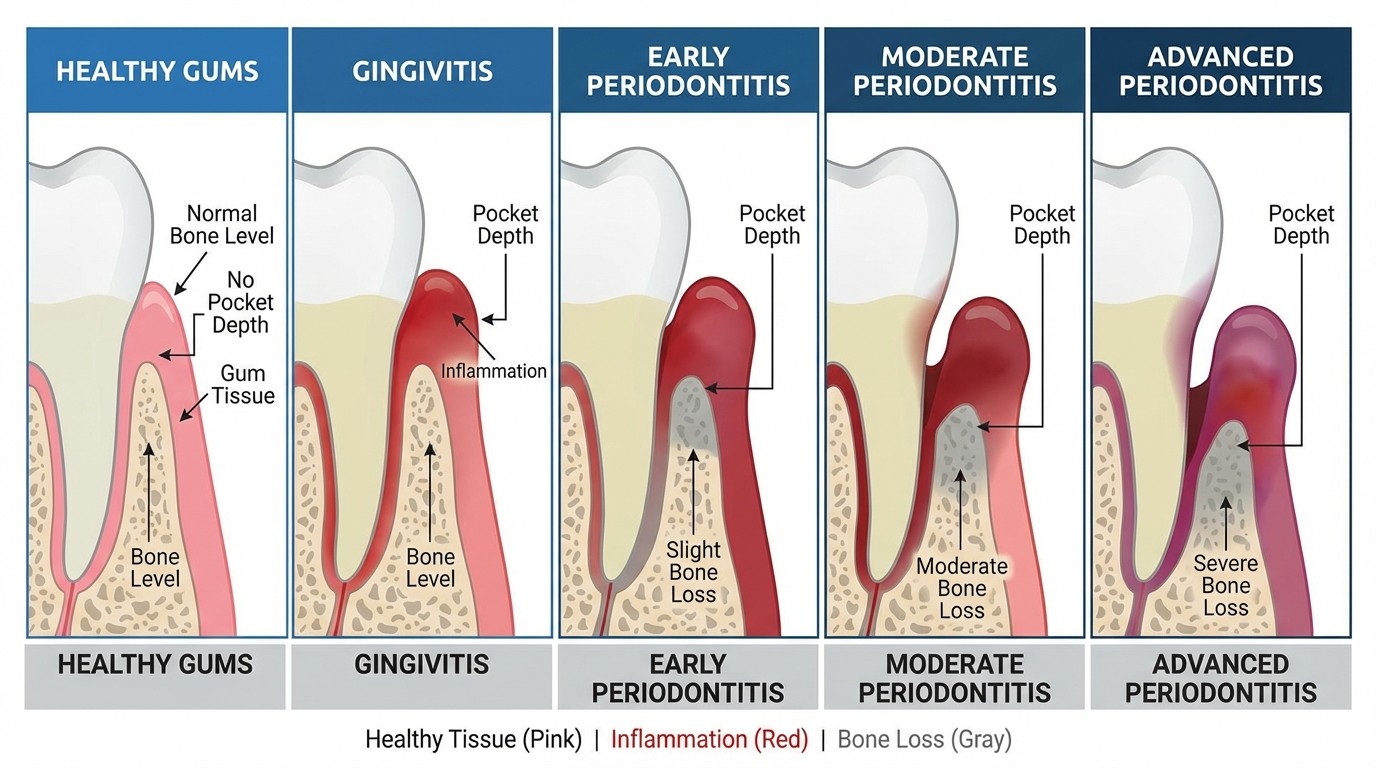
Stage 1: Gingivitis (Reversible)
Gingivitis is the earliest stage of gum disease, and here's the critical part: it's completely reversible. If you catch it at this stage and take action, you can stop the progression and restore your gums to health.
The signs of gingivitis include:
Red, swollen gums (instead of the normal pale pink, firm appearance)
Bleeding when you brush or floss
Bad breath that doesn't go away with brushing
A change in the way your gums look or feel
The good news is that gingivitis can be reversed with professional treatment and improved home care. A professional cleaning to remove tartar, combined with diligent brushing and flossing, is often all that's needed to stop the disease at this stage.
Stage 2: Early Periodontitis (Partially Reversible)
If gingivitis goes untreated, it progresses to early periodontitis. At this stage, the infection begins to move below the gumline, creating pockets between your teeth and gums where bacteria colonize. This is where the disease starts to cause permanent damage, though with aggressive treatment, some of the damage can still be reversed.
Signs of early periodontitis include:
All the signs of gingivitis, plus
Gums starting to recede (pull away from the teeth)
Pockets forming between teeth and gums
Possible bone loss visible on X-rays
At this stage, treatment becomes more involved. Professional deep cleaning (called scaling and root planing) is usually necessary, and you might need antibiotics or antimicrobial rinses to help control the infection.
Stage 3: Moderate Periodontitis (Limited Reversibility)
At this stage, the infection has spread deeper, bone loss is more significant, and the pockets are deeper. Treatment is more complex, and while you can stop the progression, reversing the damage is more limited.
Signs include:
Significant gum recession
Deeper pockets (5-7mm)
Noticeable bone loss on X-rays
Teeth starting to feel loose
Increased bleeding and pain
Treatment at this stage usually involves scaling and root planing, possible antibiotics, and sometimes surgical intervention to address the deeper pockets and bone loss.
Stage 4: Advanced Periodontitis (Damage Is Permanent)
At the most advanced stage, significant bone loss has occurred, pockets are very deep (7mm or more), and teeth are often loose. This stage can lead to tooth loss if not carefully managed.
Signs include:
Severe gum recession
Loose teeth
Pus discharge
Severe pain
Significant bone loss visible on X-rays
Treatment at this stage focuses on stopping further progression and may require surgical intervention, bone grafting, or extraction of severely compromised teeth. According to the American Academy of Periodontology, advanced periodontitis affects roughly 15% of the adult population in the United States and is the leading cause of tooth loss in adults.
What Causes Gum Disease: Understanding Your Risk
Gum disease doesn't discriminate. It can happen to anyone, but certain factors significantly increase your risk. Understanding these factors helps you take steps to prevent the disease or catch it early if you're at high risk.
Poor Oral Hygiene
This is the most obvious cause, but it bears mentioning because it's also the most preventable. If you're not brushing twice daily or flossing daily, you're allowing plaque to accumulate. Over time, this leads to tartar buildup and gum disease. The solution is straightforward: brush for two minutes twice a day, and floss at least once daily. It sounds simple, but many people don't do it consistently enough.
Smoking and Tobacco Use
Smoking is one of the most significant risk factors for gum disease. Smokers are three to six times more likely to develop gum disease than non-smokers. Why? Smoking weakens your immune system, reducing your body's ability to fight the bacteria that cause gum disease. It also impairs healing, so even if you do get treatment, smokers tend to have slower recovery and worse outcomes.
If you smoke and you're dealing with gum disease, quitting is one of the most powerful things you can do. Even cutting down significantly helps. If you need help quitting, ask Dr. Priya for resources. Many communities have free or low-cost smoking cessation programs.
Diabetes
People with diabetes are at much higher risk for gum disease, and gum disease can make diabetes worse. This bidirectional relationship means that if you have diabetes, controlling your blood sugar is critical for your oral health, and maintaining your oral health is important for your overall health. If you have diabetes, make sure you tell Dr. Priya, and work closely with her to manage your gum health.
Hormonal Changes
Women experience hormonal fluctuations that can increase gum disease risk. Puberty, pregnancy, and menopause are all times when gum disease risk increases. During pregnancy, some women develop "pregnancy gingivitis," which usually subsides after delivery. However, any gum disease during pregnancy should be treated because untreated gum disease has been linked to premature birth and low birth weight babies.
Genetic Factors
Some people are genetically predisposed to gum disease. They might have a different immune response to the bacteria that cause gum disease, or they might have weaker gum tissue. If gum disease runs in your family, that's even more reason to be vigilant about your oral hygiene and to see your dentist regularly.
Stress
Chronic stress weakens your immune system, making it harder for your body to fight off infection. This is one reason why gum disease can flare up during periods of high stress. Managing stress through exercise, meditation, good sleep, and other stress-reduction techniques can actually help your gum health.
Medications
Some medications can contribute to gum disease by reducing saliva flow (which has natural antibacterial properties) or by causing gum overgrowth. If you're taking medications and notice changes in your gums, mention this to Dr. Priya. She might recommend more frequent cleanings or different oral hygiene approaches to counteract the medication's effects.
Nutritional Deficiencies
Poor nutrition, especially deficiency in vitamin C, can impair your gums' ability to heal and resist infection. If you're concerned about your nutrition, discuss it with your doctor or a nutritionist.

TREATMENT OPTIONS: FROM CONSERVATIVE TO SURGICAL
H2: Non-Surgical Gum Disease Treatment: Often All You Need
If you're in the early to moderate stages of gum disease, non-surgical treatment is often very effective. The goal is to remove the tartar and bacteria and give your gums a chance to heal.
Professional Cleaning (Prophylaxis)
A professional cleaning removes tartar buildup above the gumline. This is what happens during your typical six-month dental visit. If you have healthy gums with no pockets, regular cleanings are usually all you need to maintain gum health.
Scaling and Root Planing (SRP)
Scaling and root planing is a deeper cleaning that addresses tartar and bacteria below the gumline. This procedure is done in sections of your mouth, usually over multiple appointments. During SRP, Dr. Priya or a hygienist uses special instruments to carefully remove tartar from below the gumline and to smooth the root surfaces of your teeth. Smoothing the roots helps prevent bacteria from reattaching.
SRP is typically done with local anesthesia, so you won't feel pain, though you might feel pressure and vibration. Most patients need four to six appointments, each addressing one or two quadrants of the mouth. The entire process takes a few weeks to complete.
Recovery is straightforward. Your gums might be a little tender for a few days, but you can return to normal activities immediately. You might be prescribed antibiotics to help control the infection, and you'll definitely be instructed on improved home care.
For many patients, SRP is all that's needed. Your gums will stabilize, pockets will shrink, and bleeding will stop. The key is maintaining excellent home care afterward to prevent the disease from returning.
Antibiotic Therapy
Sometimes Dr. Priya will prescribe antibiotics to help control the bacterial infection. These might be oral antibiotics (pills you take), or antimicrobial rinses you use daily. In some cases, antibiotics are placed directly into the gum pockets, delivering medication right where it's needed.
Antibiotics are most effective when combined with scaling and root planing. Using antibiotics without mechanical cleaning is less effective, because the biofilm is too thick for antibiotics to penetrate.
Antimicrobial Rinses
An antimicrobial rinse like chlorhexidine can help reduce bacteria in your mouth and gums. If Dr. Priya prescribes this, use it exactly as directed. Some antimicrobial rinses can cause staining if used long-term, so they're typically recommended for short-term use (a few weeks) while your gums are healing.
Improved Home Care Education
This is often the most important part of non-surgical treatment. Dr. Priya or a hygienist will teach you exactly how to brush and floss effectively. Many people think they know how to brush, but they're using incorrect technique. You should brush gently at a 45-degree angle to your gums, not aggressively. You should floss between every tooth, gently sliding the floss below the gumline. You might benefit from using an electric toothbrush or a water flosser, which many people find easier to use effectively.
The bottom line: non-surgical treatment works, but only if you commit to excellent home care. Your dentist can remove tartar and bacteria, but you're responsible for preventing it from coming back.
Surgical Gum Disease Treatment: When Non-Surgical Isn't Enough
If you have deeper pockets (6mm or more) or if non-surgical treatment hasn't been effective, surgical intervention might be necessary. The goal of surgical treatment is to eliminate the deep pockets and halt bone loss.
Flap Surgery (Pocket Reduction Surgery)
In flap surgery, Dr. Moosavi (who handles our surgical cases) makes an incision in the gum to create a flap. This allows him to access the tartar and bacteria below the gumline more effectively than with non-surgical scaling. He removes the tartar and bacteria, and then repositions the gum to eliminate or reduce the pocket. By removing the pocket, bacteria have nowhere to hide, and you can clean the area effectively with a toothbrush and floss.
Flap surgery is performed under local anesthesia and takes about an hour, depending on how much of your mouth is being treated. You'll likely be sore for a few days after, but the procedure allows for better healing and prevents future bone loss.
Bone Grafting for Bone Regeneration
In some cases, bone loss is significant and the pockets are very deep. While flap surgery can halt further bone loss, it can't regenerate bone that's already been lost. However, bone regeneration techniques using bone grafting can sometimes restore lost bone, allowing for better long-term outcomes and a better foundation for implants if teeth are eventually lost.
Bone regeneration involves placing graft material in the area of bone loss and covering it with a membrane. Over several months, your body's healing response causes new bone to grow. This is a more advanced procedure, but it can make a significant difference in long-term outcomes.
Graft Surgery for Severe Gum Recession
If gum disease has caused severe recession (where gums have pulled away from the teeth), a graft might be used to restore gum tissue. This is typically done for cosmetic reasons or to cover exposed root surfaces. During graft surgery, tissue is taken from the roof of your mouth and grafted onto the area of recession, restoring gum coverage.
Why Early Treatment Prevents Tooth Loss
Here's the critical message: gum disease is progressive, but it's also preventable and treatable. The earlier you catch it, the easier it is to treat and the better the outcome.
Think of it this way: if you catch gingivitis, treatment is simple and non-invasive. Professional cleaning and improved home care solve the problem. If you wait until you have moderate periodontitis, you need deeper cleaning and possibly antibiotics. If you wait until you have advanced periodontitis, you might need surgery, bone grafting, or extractions.
Caught early, gum disease is a minor inconvenience. Left untreated, it's the primary cause of tooth loss in adults. And tooth loss has downstream consequences: bone loss accelerates, your bite changes, adjacent teeth drift, and you might eventually need implants, which cost significantly more than preventing the gum disease in the first place.
The simple solution: see your dentist every six months. At each visit, you'll get a professional cleaning and Dr. Priya will assess your gum health. If early signs of disease appear, you'll catch it before it becomes serious. This preventive approach is far more effective and far less expensive than waiting until you have a serious problem.

How Dr. Priya Saved Teeth That Were Headed for Extraction
Jennifer's Story: The Last-Minute Intervention
Jennifer came to Veda Family Dentistry desperate. She'd been told by another dentist that she had advanced gum disease and would need to extract four teeth. She was devastated. Those were teeth she wanted to keep. A friend referred her to Dr. Priya, and Jennifer decided to get a second opinion.
Dr. Priya examined Jennifer thoroughly and took detailed measurements of her pockets. Yes, the disease was advanced, but she didn't think extraction was necessary. Instead, she recommended aggressive treatment: scaling and root planing combined with daily chlorhexidine rinses and meticulous home care using an electric toothbrush and water flosser.
Six months later, Jennifer's pockets had significantly shrunk. Her gum bleeding had stopped. Her teeth were no longer loose. A year later, she's maintained those teeth with regular cleanings every three months and excellent home care. "Dr. Priya didn't just save my teeth," Jennifer says. "She gave me a second chance. I thought I was going to lose them, and now I know exactly how to keep them for life."
Marcus's Story: Catching It Early
Marcus came in for a routine cleaning, and Dr. Priya noticed some early signs of gum disease: slight bleeding when probing, minimal pocket formation. Marcus was surprised because he felt fine. His gums didn't look bad to him. But Dr. Priya explained that early gum disease often has no symptoms. By the time you feel pain or notice a problem, the disease is often more advanced.
Dr. Priya recommended more frequent cleanings (every four months instead of six) and showed Marcus exactly how to floss more effectively. She also discovered that Marcus was using a toothbrush that was too stiff, which was irritating his gums. A softer brush and better technique made all the difference.
That was three years ago. Marcus hasn't had any progression of gum disease since. "Catching it early and addressing it immediately made all the difference," Marcus says. "Dr. Priya made me understand that gum disease is preventable if you take it seriously."
The Prevention Strategy: How to Keep Your Gums Healthy for Life
Once you've treated gum disease, the focus shifts to prevention. The goal is to prevent it from coming back. Here's the strategy Dr. Priya recommends for long-term gum health.
Daily Home Care: The Foundation
Brushing twice daily and flossing once daily is non-negotiable. But technique matters. Brush gently with a soft-bristled toothbrush at a 45-degree angle to your gums. Don't brush aggressively, which can actually damage gums. Spend at least two minutes brushing. Many people only brush for 30 seconds to a minute, which isn't enough time to reach all areas.
For flossing, many people skip it or do it ineffectively. Dr. Priya recommends either traditional floss or a water flosser, depending on what works for you. The key is getting into the space between teeth and slightly below the gumline where bacteria hide. If traditional floss is difficult for you, a water flosser can be very effective and might be easier to use.
Professional Cleanings: Prevent Tartar Buildup
Even if you brush and floss perfectly, tartar will still form on your teeth. Only a professional cleaning can remove tartar. If you've had gum disease, you'll likely need more frequent cleanings. Instead of the standard twice yearly, you might need three or four cleanings per year to keep tartar from accumulating and triggering a relapse.
Smoking Cessation: One of the Most Important Factors
If you smoke, quitting is one of the most powerful things you can do for your gum health. Smoking significantly increases gum disease risk and reduces your ability to heal. If you're not ready to quit completely, any reduction helps. Talk to Dr. Priya about resources for quitting. Many community health centers offer free or low-cost smoking cessation programs.
Manage Underlying Conditions
If you have diabetes, work closely with your doctor to keep blood sugar controlled. If you have hormonal changes, let Dr. Priya know so she can monitor more closely. If you're stressed, find healthy ways to manage stress, as chronic stress weakens immunity and increases gum disease risk.
Improve Your Diet
A diet rich in vitamins and minerals supports gum health. Make sure you're getting enough vitamin C (found in citrus, berries, and leafy greens), vitamin D, calcium, and magnesium. Limit sugary foods and drinks, which feed bacteria. And avoid acidic foods and drinks that can erode tooth enamel and contribute to gum problems.
Use an Antimicrobial Rinse if Recommended
If Dr. Priya recommends it, using an antimicrobial rinse can help keep bacterial levels down, especially during the first few months after treatment. However, rinses aren't a substitute for brushing and flossing. They're a supplemental tool.
Regular Monitoring: Stay Vigilant
The most important part of prevention is regular monitoring. Come in for your recommended cleanings and assessments. Dr. Priya will measure your pockets and watch for any early signs of relapse. If she catches early signs, she can intervene before the disease progresses. This is why more frequent appointments are often recommended for patients who've had gum disease.
The bottom line: gum disease doesn't have to be a permanent condition. With treatment and vigilant prevention, you can maintain your natural teeth for life. But it requires commitment. You need to be diligent about home care, keep your professional appointments, and address any risk factors like smoking or poor diet.
Schedule Your Comprehensive Periodontal Assessment
If you've noticed any signs of gum disease, or if it's been more than six months since your last dental visit, it's time to schedule an assessment. Dr. Priya will perform a thorough evaluation, measure your pockets, assess your bone levels, and determine exactly what stage of gum disease you're in, if any.
During your assessment, she'll explain her findings in clear language and discuss treatment options. If you need treatment, she'll outline the exact steps, timeline, and costs. If you're healthy, she'll discuss how often you should come in for cleanings and what you can do at home to maintain your gum health.
What to Bring to Your Appointment
Bring your insurance information if you have dental coverage. Many insurance plans cover scaling and root planing if it's medically necessary. Bring a list of any medications you're taking, as some medications can contribute to gum disease. And bring any questions you have about gum disease, treatment, or prevention.
Understanding Your Treatment Plan
If Dr. Priya recommends treatment, she'll discuss your options and explain why each step is important. For example, if she recommends scaling and root planing, she'll explain that this removes tartar below the gumline and gives your gums a chance to heal. She'll also discuss your home care responsibilities, because treatment only works when combined with excellent brushing and flossing.
Insurance and Financing
Many insurance plans cover periodontal treatment, especially if it's deemed medically necessary. Our billing team will verify your coverage and help you understand your out-of-pocket costs. If you don't have insurance or if your insurance doesn't cover everything, we offer flexible financing options through CareCredit and in-house payment plans.
The important thing is that cost shouldn't prevent you from getting treatment. Untreated gum disease leads to tooth loss, which is far more expensive to address than treating the disease early. We'll work with you to make treatment affordable.
Don't Wait: Act Now to Save Your Teeth
Gum disease is silent. It progresses without pain or obvious symptoms until it's advanced. By then, the damage is done. The time to act is now, before you have a serious problem.
Call Veda Family Dentistry to schedule your periodontal assessment with Dr. Priya. You can also book online at your convenience. In this assessment, we'll determine your gum health status and discuss treatment options if needed.
Gum disease is the leading cause of tooth loss in adults, but it's also the most preventable. With early detection, proper treatment, and committed home care, you can maintain your natural teeth for life. Let's start protecting your smile today.
“I’ve never felt so comfortable at a dental office. Everyone here truly cares and takes the time to explain everything clearly.”
Maria Alvarez
Teacher


